Is Sunflower Lecithin a Seed Oil?
In fact, is sunflower lecithin a seed oil? This is a question many health-conscious consumers ask whenever reading ingredient labels or researching processed food additives. Sunflower lecithin is frequently used in chocolates, baked goods, protein powders, supplements, and packaged foods as emulsifiers that help oil and water mix. Since it’s derived from sunflower seeds, many assume that it’s just another version of sunflower seed oil. But this assumption is not entirely correct. Even though sunflower lecithin comes from sunflower seeds, it’s chemically and functionally quite different from old-fashioned seed oils like sunflower oil, soybean oil, or corn oil. If you are someone following a specific diet, avoiding refined seed oils, or simply curious about ingredients in food, understanding the difference between sunflower lecithin and seed oils can be helpful.
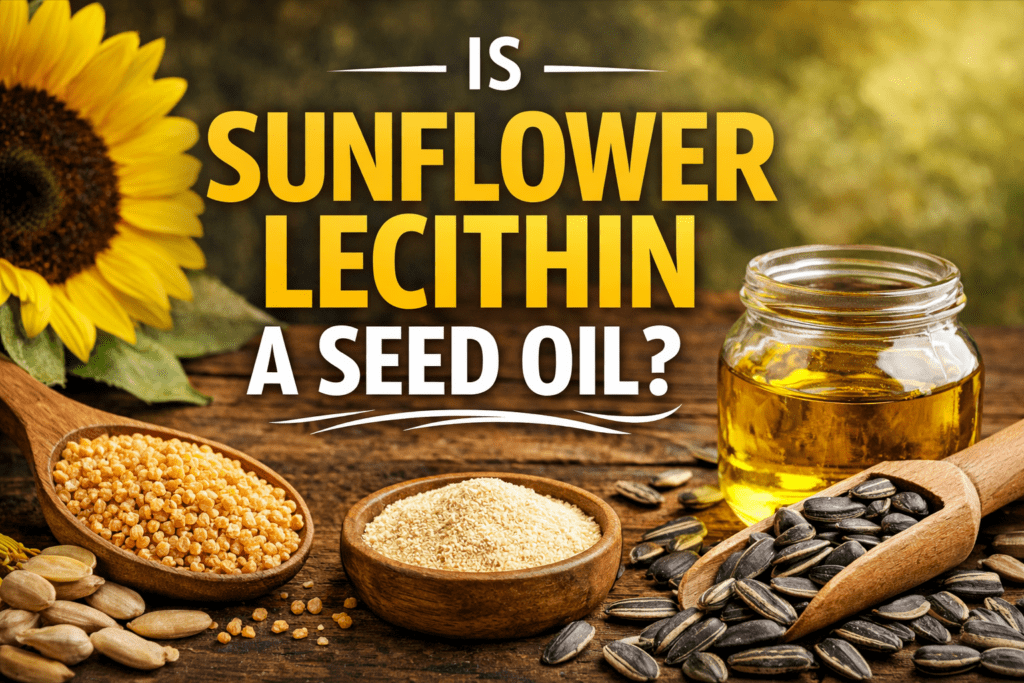
To find out the answer to “Is sunflower lecithin a seed oil?”, it’s useful to understand what sunflower lecithin actually is. Sunflower lecithin is a mixture of substances called phospholipids that are naturally found in sunflower seeds and removed during the oil extraction process. Phospholipids are unique fat-like molecules that help form cell membranes and assist in blending water and fat. Because of these properties, sunflower lecithin is commonly used in the food industry as a natural emulsifying agent that improves texture, stability, and shelf life. Unlike cooking oils that mainly contain triglycerides and are consumed as a source of dietary fat, sunflower lecithin contains phosphatidylcholine, phosphatidylinositol, and other phospholipids that perform structural and functional roles in food products rather than acting as a primary fat source.
The way sunflower lecithin is produced also helps explain why it is not technically considered a seed oil. When sunflower seeds are processed, they are first cleaned and pressed to extract crude sunflower oil. During the refining stage of the oil, lecithin naturally separates from the oil as a sticky substance rich in phospholipids. This material is then filtered, purified, and processed into forms such as liquid lecithin, powder, or granules. While sunflower oil becomes a refined cooking oil used for frying or general food preparation, sunflower lecithin is collected separately and used in much smaller quantities for functional purposes in food manufacturing. Because of this separation and its different chemical composition, nutrition experts and food scientists usually do not classify sunflower lecithin as a typical seed oil.
Another major reason people ask “Is sunflower lecithin a seed oil?” is the growing discussion around seed oils and their possible health effects. In recent years, certain dietary communities have criticized seed oils such as sunflower oil, soybean oil, and corn oil because they contain high levels of omega-6 fatty acids and often undergo significant industrial processing. Sunflower lecithin, however, is used in very small quantities and contains beneficial phospholipids rather than large amounts of omega-6 fats. These phospholipids are important components of human cell membranes and contribute to functions related to brain health, liver function, and fat metabolism. Because of these differences, sunflower lecithin is generally viewed as far less controversial than refined seed oils.
From a nutritional perspective, sunflower lecithin includes several compounds that may support certain aspects of health. One notable component is phosphatidylcholine, which provides choline—an essential nutrient involved in brain function, nerve signaling, and liver health. Choline also helps the body produce acetylcholine, a neurotransmitter that plays a role in memory and cognitive performance. In addition, sunflower lecithin contains other phospholipids that assist with transporting fats in the body and maintaining the structure of cell membranes. Because of these properties, sunflower lecithin supplements are sometimes marketed for supporting cognitive health, cholesterol balance, and liver function, although further scientific research is still needed to fully confirm these benefits.
Sunflower lecithin is widely used in the food industry because it improves the texture and stability of many products. In chocolate production, it helps reduce viscosity and create a smoother consistency. In baked goods, it improves dough handling and helps retain moisture. It is also commonly added to protein powders, nutritional beverages, meal replacements, and infant formulas to help ingredients blend properly. Since sunflower lecithin comes from sunflower seeds rather than soybeans, it is often chosen as an alternative to soy lecithin for individuals who want to avoid soy allergens or genetically modified ingredients.
Another reason sunflower lecithin has become popular is that it is typically produced using relatively gentle extraction methods. In many cases, manufacturers rely on mechanical or cold-press techniques instead of harsh chemical solvents. This approach helps maintain the natural structure of phospholipids and reduces the level of processing compared with some refined oils. Additionally, sunflower lecithin is naturally gluten-free and generally non-allergenic, making it suitable for many dietary preferences, including vegan, gluten-free, and soy-free diets.
Even with these advantages, it is important to remember that sunflower lecithin is usually consumed in very small amounts as a food additive rather than as a major nutritional source. In most food products, lecithin makes up less than one percent of the total ingredients. Because of this, its impact on daily fat intake or calorie consumption is minimal. For the majority of people, sunflower lecithin is considered safe and well tolerated. Regulatory authorities such as the U.S. Food and Drug Administration classify lecithin as “generally recognized as safe” when used in typical food quantities.